
Logistics Leaders Navigate Cost and Automation
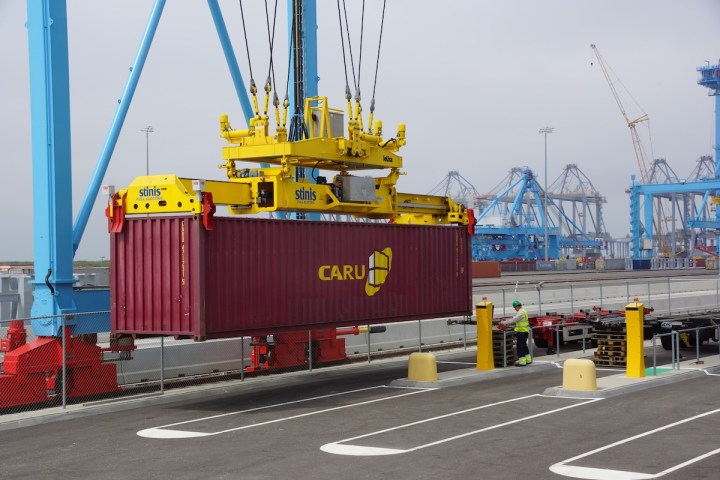
Gartner’s VP analyst David Gonzalez shares strategies for profitability and technology in supply chain management.
BARCELONA, Spain— Supply chain operators are facing more pressure from unpredictable shipping costs, higher customer service expectations, automation, and ongoing labor shortages. As chief supply chain officers work to keep things running during global disruptions, logistics is changing in fundamental ways.
In an interview at the recent Gartner Supply Chain Symposium/Xpo, David Gonzalez, VP analyst at Gartner, told EE Times that the industry needs to focus on careful cost management, practical technology, and updated infrastructure. He described important changes that will help logistics support business growth.
(Source: Gartner)
Imperative for profitability
David Gonzalez (Source: Gartner)
“Logistics has always been challenged with cost optimization but high standards of service delivery,” Gonzalez said, noting this is a constant expectation in the field. But as consumer demand grows, companies risk losing profit. “Customer expectations are increasing, but you have to do it profitably as well,” he said.
Gonzalez emphasized that logistics services must not operate at a loss. He recommended that companies use strict cost-to-serve and cost-to-deliver models. This requires operators to carefully assess the tradeoffs of premium services, such as same-day delivery, and the investments needed to provide them.
Logistics leaders and company decision-makers need to communicate openly to keep costs under control. Gonzalez said logistics managers should be honest with executives about the real costs of their requests. “Maybe sometimes logistics leaders need to share that information to say, yes, I can deliver whatever it is you want me to deliver, but are you prepared to spend money on that level of expectation?” he said.
Executives often keep service levels consistent or use customer segmentation to match delivery costs to product value. Logistics leaders have to decide if they can pass costs on to customers or cover them with product margins. “If the answer is no, then logistics leaders should ask whether we should do this at all,” Gonzalez said.
Visibility of the supply chain
As global supply chains become increasingly complex, reliable shipment tracking is more important than ever. Gonzalez pointed out that manual methods are no longer enough. “Emailing spreadsheets back and forth for visibility doesn’t work anymore,” he said, given the growing number of disruptions facing the industry.
However, he warned companies not to overspend on tracking technology without a clear plan. Organizations must decide if they need to track products, truck locations, or broader information. A detailed, constant tracking like big e-commerce platforms offer. “One customer said, ‘I want the Amazon experience—updates every few minutes on my driver’s location,’” he recalled.
Gonzalez responded by warning about the costs. “Be careful what you wish for… Are you ready to spend what Amazon did for that level of tracking?” He suggested only alerting managers about delays or problems, instead of tracking everything all the time.
Pragmatism in AI adoption
Despite a focus on AI, logistics lags other enterprise areas in adopting it. Gartner reports that only about 13% of logistics leaders have fully implemented AI, trailing manufacturing, planning, and supply chain strategy.
Gonzalez sees this slow adoption as a sign that the sector is practical. “Whether that illustrates a healthy dose of skepticism on the part of logistics, or whether we are still too focused on the physical execution of logistics, I’m not sure,” he said.
Gonzalez recommended starting with small projects that solve specific problems, instead of trying to overhaul all technology at once. He mentioned Unilever’s use of agentic AI to handle daily questions about orders, trucks, and containers. The system answers questions, tracks exceptions, and finds relevant data.
“Because of that, productivity for Unilever’s logisticians rose by 50%,” Gonzalez said. He said this kind of targeted investment is a smart approach and warned that buying technology without a plan can waste money fast.
Workforce reality and automation
Gartner predicts that by 2030, half of the new warehouses in developed markets will be ‘robot-centric,’ making human labor optional.
“AI continuously optimizes warehouse environments in real-time, shifting them from static structures into agile systems that adapt as demand changes,” said Abdil Tunca, senior principal analyst in Gartner’s supply chain practice.
Source: Adobe Stock
This aligns with Gonzalez’s view that demographic shifts are driving companies toward greater automation. “Necessity is going to be the mother of acceleration rather than invention in logistics,” he said, pointing out that fewer young people want jobs in warehouses or as truck drivers.
Advanced humanoid robots remain costly and face challenges such as heavy batteries, but traditional industrial robots are already widely used. The main challenge is making everything work together. Gonzalez said the industry should update its equipment, instead of trying to fit robots into old spaces.
“Maybe we need to adapt our infrastructure to accommodate the capabilities of the robot,” he suggested, pointing out that warehouses and vehicles may need to be redesigned. Operators should plan for a decade ahead where human pickers are scarce, thereby altering infrastructure “to the reality of the future rather than the other way around.”
Shift from standardization to customization
Changing consumer needs make it harder to adapt infrastructure. In the past, logistics depended on uniform systems. “We standardize everything—pallets, containers—for efficiency,” Gonzalez explained.
But direct-to-consumer delivery requires more customized handling. “You’re asking an industry to go from a high degree of standardization to a high degree of customization,” Gonzalez said. “And the transition is the struggle.” This problem is reflected in automated centers struggling to handle unusual items and excessive packaging.
Gonzalez cited a longstanding industry example to illustrate the limitations of today’s robots when handling oddly shaped items. “The robot can very easily pick the perfect box, but how does it pick these things that are cumbersome and inconvenient and challenging?” he asked, pointing to the challenge of automating the handling of a canoe.
Figuring out how to handle these physical challenges remains a big obstacle as the industry moves toward more automated and customized logistics networks.
See also:
Suggested content from our partner Arrow:
More from EE Times:
RELATED TOPICS:AUTOMATION, HUMANOID ROBOTICS, LOGISTICS, ROBOTICS, SUPPLY CHAIN, WAREHOUSE
COMPANIES:GARTNER
_Pablo is a seasoned engineer with 30+ years of experience. For over 10 years, he's been a contributing editor for EE Times (now editor of the Supply Chain section). He also wrote for EPSNews, InformationWeek, EBN, LightReading, Network Computing, and IEEE Xplore. His coverage spans Supply Chain, Semiconductors, Networks, IoT, Security, and Smart Cities. He holds an MEng, Electrical and Electronics Engineering from The Ohio State University._Follow Pablo on LinkedIn
0 comments