Connectivity Revolution or Evolution Inside Data Centers?
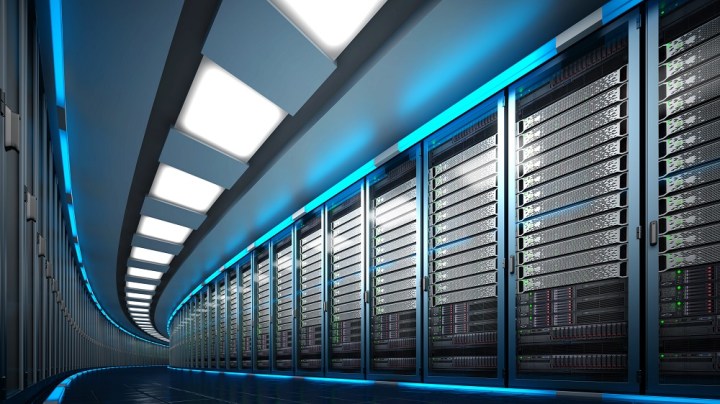
AI is radically changing the role of connectivity inside data centers, to the point where intra-data center networks are becoming as critical as the compute itself. The intra-data center backend network (which connects AI accelerators to each other and to memory for workload distribution) is effectively becoming an extension of the computing system.
So, are we facing a revolution or an evolution in intra-data center networking? Maybe a mix of both.
The revolutionary surge in AI workloads is pushing for new technologies, but these technologies leverage existing approaches, building on a continuum of innovations stretching back years.
For decades, copper cables were the default for intra-data center connections. Copper is inexpensive, easy to work with, and effective over short distances. But copper struggles as data rates climb and distances grow, with signal integrity degrading due to attenuation and electromagnetic interference.
Optical fiber, on the other hand, can carry far higher data rates over longer distances with minimal signal loss and no electromagnetic effects. Currently, almost all 400 Gbps data center connections beyond approximately 5 m (i.e., any high-performance connection beyond a single rack) have transitioned to optical. Faster AI accelerators are already pushing intra-rack connectivity to switch to optical. Ultimately, every connection inside an AI factory data center will be implemented using optical fibers.
The past few years have witnessed an impressive progression of optical link speeds, moving rapidly from 100 Gbps to 400 Gbps to 800 Gbps, and emerging 1.6 Tbps. Meeting the demands of AI training and inference, however, requires more than faster ports.
AI redefining data center networks
Historically, data centers used a scale-up strategy for growth: a vertical approach that adds bigger servers or more processors to a rack. Modern AI challenges that paradigm. Large AI models and distributed training must orchestrate thousands of processors/accelerators in unison. This means data center buildouts need to scale out, connecting myriads of nodes across racks, rows, and adjacent buildings, to act as one single computing fabric working on shared tasks.
While distributed computing isn’t new, the sheer scale and performance of these AI fabrics are unprecedented. Enormous AI training clusters are being built where the scale-out network handling terabits per second of traffic at single-digit microsecond latencies connects thousands of racks each outfitted with dozens of GPUs. Public estimates for large AI clusters suggest (averaging optics across a full fabric) that these deployments can require three to six optical transceivers per GPU. This translates into over a million short‑reach optical transceivers to connect servers to top‑of‑rack leaf switches, and top‑of‑rack leaf switches to spine switches within a single data center with hundreds of thousands of GPUs.
In fact, industry analysts such as LightCounting forecast that sales of Ethernet optical transceivers and co-packaged optics will double over the next five years, with intra-data center applications accounting for most of that growth. Global demand is expected to reach hundreds of millions of units annually over the coming years to support a massive deployment of AI clusters.
Today’s pluggable optics: FRO, LRO, LPO
To support the AI optical explosion, innovation has focused not just on faster links, but on how optical modules themselves are designed and deployed. Inside the data center, power efficiency and density rule. This has resulted in new optical architectures that reduce power consumption and footprint while enhancing deployment flexibility.
Traditional pluggable optical modules use fully retimed optics (FRO), which integrate signal processing on both transmit and receive paths. This delivers robust performance and long reach at the expense of power consumption and latency. Newer approaches take a lighter touch. Linear‑receive optics (LRO) simplify the receive path by relying on signal processing in the switch ASIC, significantly reducing module power and latency. Pushing this concept further, linear pluggable optics (LPO, or linear drive) remove active signal processing from the pluggable module altogether, delivering very low power consumption and minimal latency for short‑reach links, provided the host is designed to support this model.
Importantly, all three approaches coexist in modern data center networks. FRO continues to serve applications that demand reach and robustness, while LRO and LPO are gaining momentum for high‑volume, short‑reach intra-data center links where efficiency and density are paramount. Together, these approaches illustrate the evolutionary path of optics, balancing performance and power as revolutionary data center networks scale for AI.
Tomorrow’s optical evolution: NPO, CPO, XPO
Optical pluggables continue to be reimagined. A novel concept called extra-dense pluggable optics (XPO) was introduced by an industry consortium in early 2026 as a way to significantly boost optical front-panel density, a key limiting factor in intra‑data center connectivity. An XPO module delivers an unprecedented 12.8 Tbps of bandwidth, and while it is larger than an octal small form-factor pluggable (OSFP), it still allows for roughly a four-fold increase in front-panel density compared to today’s pluggable solutions. Since XPO integrates liquid cooling, these modules are also capable of supporting more power‑hungry coherent optics.
In parallel, the industry has also been exploring more radical optical integration models.
At the core of this shift is a simple idea: bringing optics closer to compute or switching reduces signal losses and the power required to compensate for them, while overcoming space limitations in the front-panel.
Near‑packaged optics (NPO, also known as on-board optics) move optical engines off the front panel and closer to the switching silicon, reducing electrical distances and improving efficiency. This approach delivers clear gains in power consumption and signal quality but sacrifices flexibility since the optics are no longer easily replaceable.
Co‑packaged optics (CPO) take this concept further by integrating optics directly into the switch chip package. By drastically reducing electrical interconnects, CPO promises ultra‑low latency and exceptional energy efficiency. At the same time, it challenges long‑standing assumptions around serviceability, manufacturing, and interoperability.
Together, XPO, NPO, and CPO illustrate how the evolution of intra‑data center optics is no longer just about faster links, but about fundamentally re-engineering how optics, electronics, and compute come together in the AI era.
Data center connectivity in the AI era is experiencing both a revolution, in terms of requirements and scale, and an evolution, building on decades of optical progress.
Read also:
At OFC 2026, eXtra-dense pluggable optics (XPO) resonated strongly because it directly addresses the fundamental challenges of next-generation AI infrastructure: bandwidth density, power efficiency, thermal management, and serviceability.
RELATED TOPICS:AI ACCELERATOR, AI INFERENCE, CO-PACKAGED OPTICS, DATA CENTERS, EXTRA-DENSE PLUGGABLE OPTICS (XPO), OPTICAL NETWORKS, OPTICS & PHOTONICS
COMPANIES:NOKIA
_Teresa Monteiro is director of marketing at Nokia, while Rimlee Deb Roy is senior staff market research analyst in Nokia's Optical Product Marketing division._
0 comments