
Gartner Says Supply Chain Confronts Geopolitical and AI Challenges
Gartner’s Santalo highlights strategies to navigate chaos, orchestrate agility, and accelerate Innovation.
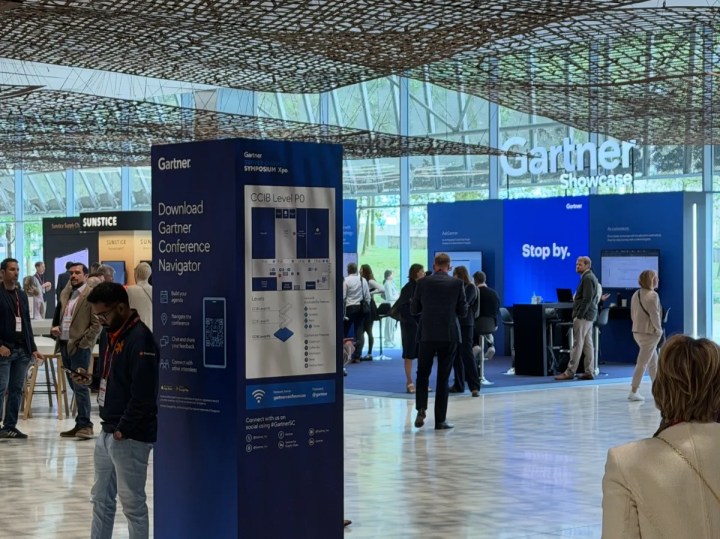
BARCELONA, Spain — During last week’s Gartner Supply Chain Symposium/Xpo, Alejandro Santalo, a senior director analyst at Gartner, outlined in an interview with EE Times the primary challenges and strategic adjustments that chief supply chain officers face today.
Santalo argued that executives must adapt operational models to address capacity constraints driven by data center growth and new import restrictions in a complex global market.
Image by Valerii Iavtushenko from Pixabay
Geopolitics and regulatory pressures
The regulatory environment governing technology imports is tightening, signaling a broader movement toward supply chain decoupling. The recent May 2026 summit between the U.S. and China highlighted an acceleration toward what analysts term “corporate geopolitics.”
According to Santalo, this concept involves using corporate capital, industrial ecosystems, and private-sector speed as instruments of geopolitical influence and economic strategy. Traditional diplomacy relies on slow regulatory reviews and long implementation cycles, but corporate action compresses this timeline through private-sector execution speed.
Santalo advised executives “should prepare for rapid shifts in sourcing, industrial investment, energy competition, and manufacturing alignment as the May 2026 Trump-Xi summit highlighted a shift toward corporate geopolitics.”
Alejandro Santalo (Source: Gartner)
Specifically, he recommended that leaders assess alternative supply partners, evaluate capital allocations, monitor policy developments, and build operational flexibility. He noted that CEOs, capital markets, and industrial policy will reshape supply chains faster than traditional diplomacy.
This geopolitical tension is increasingly manifesting in targeted regulatory actions, such as the U.S. Federal Communications Commission’s decision to ban consumer routers manufactured abroad. Santalo views this development as an early signal for broader network decoupling, warning that the language used in the order centers on protecting national security.
“While the order clearly focuses on consumer routers, supply chains must consider that similar actions could be taken in the future for other products and technologies, as it can be seen in the growth of the list of equipment and services deemed to pose an unacceptable risk to national security,” Santalo said.
Organizations producing critical technologies should develop scenario-based playbooks to anticipate and address regulatory shifts. For companies impacted by restrictions, Santalo recommended seeking conditional FCC approval to keep market access while relocating production to compliant regions.
Hyperscalers and capacity constraints
AI is fundamentally reshaping hardware demand patterns, creating a severe capacity shortage for legacy technology buyers. The requirements of hyperscalers are redirecting semiconductor manufacturing capacity.
Hyperscaler influence has reshaped demand patterns, eliminating traditional seasonality in the high-tech sector. Memory manufacturers now prioritize high-bandwidth memory for data centers, making other sectors compete for the remaining capacity.
Micron’s Fab 6 in Manassas, Virginia (Source: Micron)
This environment requires a shift away from standard procurement strategies focused primarily on price negotiations. “You need to work long-term relationship securing capacity,” Santalo explained, adding that for supply chain leaders, “it’s not about margin, it’s about protecting revenue.” Ensuring that capacity is available is the only way to capture revenue when competitors face supply shortages.
With hyperscalers reportedly placing capacity orders for 2028 and 2030, companies attempting to negotiate allocations for 2026 are already arriving too late to the market. The complexity of semiconductor manufacturing compounds the issue, as companies cannot easily shift production lines or find alternative fabrication facilities for advanced processing nodes.
Advanced semiconductor manufacturing remains highly concentrated in Taiwan, and Santalo recommended supply enablement over disruption avoidance to secure supplier access and market share.
AI integration strategies
On the operational side of AI, Santalo noted a widening maturity gap between leading supply chain organizations and the rest of the industry. The most advanced companies distinguish themselves through a disciplined approach to technology adoption. First, they focus heavily on data readiness, ensuring that previously siloed information is accessible to decision-makers in real time.
Second, they deploy AI to address specific business challenges rather than adopting the technology for its own sake. As Santalo advised clients, “Do not create an AI strategy, infuse your strategy with AI.”
These mature companies are also redesigning their processes to accommodate AI, expecting that autonomous agents will soon run many workflows independently, with human involvement focused primarily on oversight, governance, and exception management.
Santalo noted that companies such as Microsoft have publicly committed to deploying hundreds of agents to run supply chain operations. Furthermore, leading firms extend their AI integration beyond their internal operations, connecting their ecosystems with external partners to gain visibility into lower-tier suppliers.
Despite the rapid adoption of new technologies, Santalo identified significant operational missteps across the sector. One common error is the singular focus on generative tools at the expense of established analytics. “Many companies are ignoring traditional AI and machine learning because of the hype of generative AI,” Santalo noted, emphasizing that traditional machine learning remains highly effective.
Santalo warned that deploying agentic AI can introduce new vulnerabilities. He recommended that organizations update operating models and governance frameworks to mitigate cyber, operational, and compliance risks and to prevent supply chain disruptions.
Diversification and circular economy
In response to geopolitical risks and supply constraints, high-tech manufacturers accelerate the geographic diversification of their production networks. Santalo shared industry data indicating a clear intention among electronics companies to increase manufacturing capacity in countries such as Vietnam, India, Mexico, and the U.S.
He described this realignment as an “insurance policy” for companies seeking to protect their most critical revenue streams against potential policy changes or tariff implementations. However, this shift creates new complexities, as modern PCBs contain thousands of components that must navigate a complicated matrix of export controls and local regulations.
Simultaneously, the concept of circularity within the electronics supply chain is evolving from an environmental mandate into a practical sourcing strategy. Santalo noted a distinct shift in corporate mindset, where companies view the reverse supply chain as a new source of supply for scarce materials.
Rather than merely refurbishing entire products, specialized recycling firms are increasingly focused on salvaging viable components directly from hardware or recovering raw metals through industrial smelting.
Santalo recommended that supply chains prioritize reverse-supply items based on their value to resilience, with a particular focus on scarce materials, volatile commodities, and critical components.
By collaborating with regional partners on localized recycling or energy projects, companies can stabilize their supply lines and reduce overall risk in an increasingly constrained global market.