
The Stratosphere Race: HAPS Move from Experiment to Commercial Reality
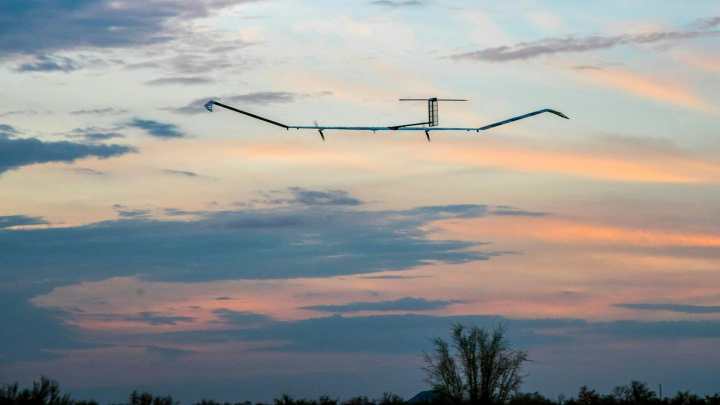
While autonomous flight is often associated with drones, a revolution in autonomy is unfolding in the stratosphere. At altitudes of about 20 km, high-altitude platform stations (HAPS) from the likes of Airbus subsidiary Aalto, Thales, and BAE Systems’ Prismatic are targeting the largely untapped airspace between most air traffic and low-Earth-orbit (LEO) satellites.
Far above the clouds and high winds, these aircraft draw on solar power to stay aloft with the promise of providing persistent connectivity, Earth observation, and surveillance across vast regions below for days, weeks, and even months. In late 2024, Prismatic demonstrated that promise with its Phasa-35 high-altitude pseudo-satellite. Launched from New Mexico, the aircraft climbed beyond 20 km (66,000 feet) into the stratosphere and sustained flight for 24 hours before landing again. Two days later, it was back in the air, showcasing a rapid turnaround.
The HAPS momentum continued in early 2025, when Kea Aerospace’s Atmos Mk1b set off from South Island, New Zealand, to reach over 17 km (56,000 feet) and fly for 8 hours and 20 minutes. Then, in May 2025, Aalto also pushed HAPS flight further with the launch of Zephyr from Kenya. Flying above 18 km (60,000 feet), the platform maintained a direct wireless connection to a 4G device on the ground for multiple days before heading toward Australia—crossing the turbulent Intertropical Convergence Zone twice.
In total, Zephyr spent a remarkable 67 days in the stratosphere. One year on, it is getting ready for commercial applications. As Aalto COO Pierre-Antoine Aubourg noted, “We will soon extend our 67-day flight to 90 days, and [after that,] we are targeting 200 days. … Persistent stratospheric missions and capabilities are a reality.”
Zephyr outside a hangar: Aalto has a purpose-built HAPS facility in Laikipia County, Kenya. (Source: Aalto HAPS)
Staying power
Zephyr’s ability to remain in the thin air of the stratosphere for 67 days is largely down to its extremely light, composite airframe; high-end solar cells; and lightweight, ultra-high-energy-density batteries. Weighing only 75 kg with a 25-meter wingspan, the aircraft uses InGaAs triple-junction solar cells from U.K.-based Microlink Devices to recharge its batteries, which are state-of-the-art lithium-ion cells with silicon anodes manufactured by U.S.-based Amprius Technologies. “We can capture enough solar energy during the day to charge the battery, which then has the capacity to power the aircraft throughout the night,” Aubourg said.
While the HAPS operates autonomously in the stratosphere, Aalto has developed advanced flight-control software to support the aircraft during takeoff and landing. “The flight control laws take advantage of the aircraft’s flexible structure and stabilize it during dynamic weather conditions, such as vortex turbulence, making the transition between the ground and stratosphere a bit smoother,” he said. “This is a delicate [place], and we don’t want to stay in it for too long.”
Zephyr shortly after takeoff: Aalto describes the aircraft as “the world’s most advanced fixed-wing aircraft.” (Source: Aalto HAPS)
A key application for Aalto is secure communications relay in disaster-prone and remote regions, where Zephyr’s persistent coverage can support rapid network recovery. Back in June 2024, Japanese communications companies Space Compass and NTT Docomo invested $100 million into the company to commercialize both connectivity and Earth-observation services across Japan and wider Asia. “Japan suffers from regular earthquakes and tsunamis, so our partners want to make sure they can recover networks quickly after a disaster to limit business disruptions,” Aubourg said.
Aalto has also inked deals with Indonesian communications companies Telkomsel and Mitradel to explore wireless connectivity in underserved regions of the country. And in February this year, the company launched a call to the industry to collaborate on payloads up to 8 kg for deployment in Australia’s northern region.
“Around half the people in the world are lacking connectivity, and there’s a real appetite to connect locations where a ground network is not profitable,” Aubourg said. “On flat terrain, we can provide connectivity to the equivalent of 250 ground towers. So we’re now preparing for commercialization and ramping production to deliver services.”
According to Aalto, such a service will provide low, 5- to 10-ms latency with direct-to-device communications via standard smartphones. But the company’s future isn’t just connectivity.
Zephyr is also positioned to deliver Earth observation, promising high-resolution, low-latency, real-time imagery, video, and geospatial data to sub-20-cm resolution, bridging the gap between satellite and drones.
Defense applications are also emerging, with Aalto targeting intelligence, surveillance, and reconnaissance operations. Potential services may include synthetic-aperture radar, VHF-SHF for communications interceptions, and C-X band for radar detection. “If you asked me a few years ago, I would have said connectivity was our key driver, but given today’s geopolitical situation, we are seeing interest ramping from [defense],” Aubourg said. “The military is interested in bringing connectivity directly to the soldier on the battlefield. In Ukraine, for example, this could be used to control a small fleet of low-altitude drones to attack.”
U.K. final assembly line: Zephyr can provide direct-to-device connectivity, military intelligence, and Earth observation. (Source: Aalto HAPS)
A different approach
What connects Aalto, Prismatic, Kea Aerospace, and numerous other HAPS players is a shared focus on remarkably lightweight, fixed-wing aircraft. However, U.S. aerospace company Sceye is taking a different approach, developing a lightweight, helium-filled, fabric airship: SE2.
In April this year, the autonomous platform flew for 12 days straight in the stratosphere. Traveling from New Mexico to the coast of Brazil, it held its position and altitude for more than 88 hours over several selected areas, operating continuously throughout the days and nights before completing a planned and controlled flight termination.
Sceye was founded in 2014 by Mikkel Vestergaard Frandsen. (Source: Sceye)
“The plan was to clock some hours while station-keeping our position off the coast of Brazil—we did that—and this has been a defining step toward unlocking the stratosphere as a new layer of infrastructure,” Mikkel Vestergaard Frandsen, founder and CEO of Sceye, said. “We see this flight as the completion of our endurance test, and that essentially means that the training wheels are now off, and our platform is ready to service clients.”
Like its fixed-wing counterparts, SE2 uses solar cells—in this case, thin-film arrays—to generate its power during daylight, charging its high-energy-density lithium-sulfur batteries for nighttime operation. On-board electronics and sensors track platform status, enabling autonomous operation and controlling power and gas pressure during a day-night cycle.
“We use gas to keep us up, solar power during the day, and batteries at night, feeding an electric propeller to point us into the wind,” Frandsen said. “Combined with our aerodynamic shape, this holds our position and altitude over the area of operation.”
Following the success of its endurance trial, and in a similar vein to Aalto, Sceye’s next step is to test wireless connectivity in underserved regions. The company’s HAPS is now scheduled to take its first commercial test flight with its investor, Japanese telecoms and IT operator SoftBank. On this flight, the airship will transit from New Mexico to Japan, where Sceye will backhaul into SoftBank’s core network and run several connectivity demonstrations during emergency and disaster-response scenarios.
For the test flight, Sceye had custom-built a stratospheric telecoms antenna, SceyeCell, designed to bring high connectivity at scale—covering the equivalent of 500 ground towers—for long durations from the stratosphere. As Alfredo Serano, Sceye’s director of EMEA, who specializes in telecoms, noted, “It’s a fully regenerative 4G or 5G node that is acting as a tower in the sky.
“We spoke with different operators across different geographies and economic environments and concluded that we needed a MIMO antenna designed to balance the best possible coverage and capacity,” he added. “[The antenna] can cover between 70 and 90 km in radius—although we have demonstrated it can reach up to a 140-km radius—and can deliver a capacity north of 3.5 Gbps.”
The antenna has electronic beam-steering to control the beam angle and uses motion-compensation algorithms that work with GPS location and altitude to ensure the beams are always aligned and pointing in the right direction. “We can also use mechanisms such as null-forming to avoid propagating radio-transmission signals into areas that are already covered,” Serano said. “This way, we can avoid interference with the ground towers.”
Following the Japan test flight, a second platform will then move to Peru, followed by a yet-to-be-named location for its second and third test flights, which will all take less than a year. And from here, Frandsen is confident that mass-market connectivity will follow, which is his company’s main focus over the emerging defense markets that fixed-wing aircraft are edging toward. “Mass-market connectivity requires us to fly this 250-kg antenna with between a 4- and 5-kW power draw to the payload,” he said. “In contrast, fixed-wing operators [typically] fly around five kilos to the stratosphere.”
According to Frandsen, initial operations in Japan could involve a fleet of HAPS “parked” over the country that can then converge on the region that’s been struck by disaster, be it a tsunami, earthquake, or typhoon. He is also certain the tech can work alongside LEO satellites and small satellite constellations, as well as ground networks, to form a ubiquitous network that serves everyone. “I believe that all the real-time services from, say, autonomous vehicles, that are the promised land of 6G, are highly likely to take place in the stratosphere,” he said. “So let’s have all three layers talking together: traditional telcos with stratospheric infrastructure with LEO constellations.”
As Sceye readies for Japan and Aalto explores Indonesia, other HAPS players are looking to roll out services from the stratosphere. Industry sources indicate that NASA, on behalf of the Air Force Research Laboratory, has awarded a $10 million contract to Prismatic to deploy airborne surveillance missions. Meanwhile, Kea Aerospace is preparing flights around New Zealand to monitor water quality as well as missions over Antarctica to track ozone levels. And away from mass connectivity, Sceye has identified methane leaks over the Permian Basin in New Mexico.
“Going forward, I do think that the biggest role we have is a normative one,” Frandsen said. “We want to make HAPS normal.”
Read also:
Mikros Technologies and Carbice Corporation are adapting technology originally created for the International Space Station to solve heat-dissipation problems in AI data centers.